


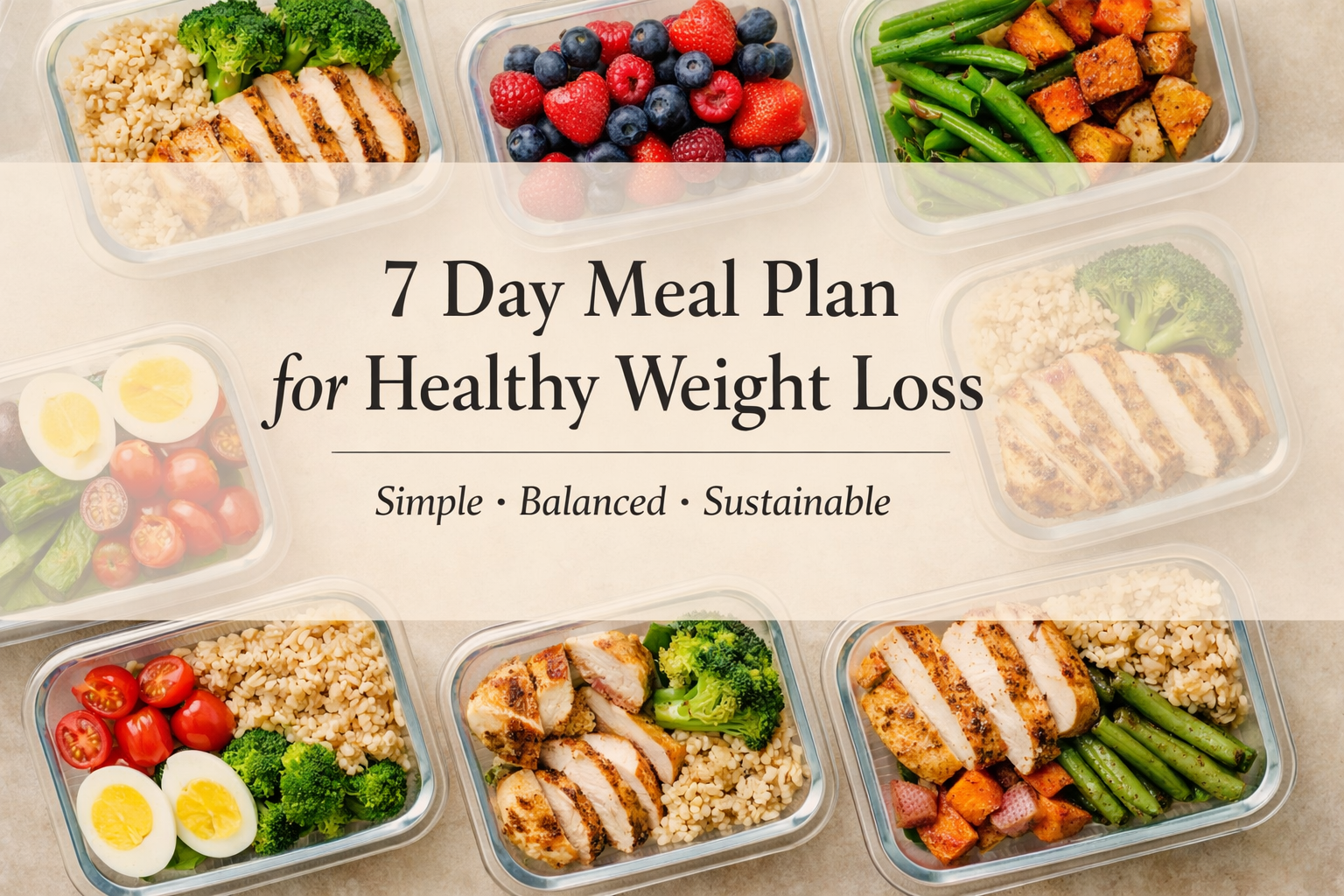
This Diet Plan for Weight Loss gives you a practical 7 day weekly guide with balanced meals, high protein options, and simple habits to help you reduce weight safely and build a healthy lifestyle.
Diet Plan for Weight Loss is one of the most searched topics today because many people want to lose weight quickly but safely. You may feel confused by strict diets, calorie counting, or extreme plans that promise fast results. The truth is that healthy weight loss does not require starving yourself or following trends. With a smart 7 day weekly guide, the right weight loss foods, and a balanced routine, you can reduce weight step by step and protect your health. This guide will show you exactly how to start.
How Does a Healthy Diet Plan for Weight Loss Work?
A healthy diet plan for weight loss focuses on balance, not starvation. It helps you eat fewer calories than your body burns while still giving you enough nutrients.
How a Calorie Deficit Works
Your body needs energy from food.When calorie intake exceeds calorie burn, it causes your body to gain weight.When you eat slightly fewer calories than you burn, your body uses stored fat for energy. This is called a calorie deficit.
Safe weight loss usually means losing 0.5 to 1 kilogram per week.
Why Protein, Fiber, and Healthy Fats Matter
Protein helps protect your muscles and keeps you full longer.
Fiber improves digestion and controls hunger.
Healthy fats support hormones and brain health.
Why Crash Diets Fail
Crash diets may cause quick weight loss, but most of the loss is water and muscle. They slow down metabolism and often lead to weight gain later. A smart weekly plan is more effective.
Smart 7 Day Diet Plan for Weight Loss
This weekly plan is balanced and easy to follow. You can adjust portion sizes based on your needs.
Day 1 Balanced Start
Breakfast: Oatmeal with banana and a few almonds
Snack: Apple
Lunch: Grilled chicken salad with olive oil and lemon
Snack: Greek yogurt
Dinner: Vegetable soup with one whole wheat roti
Day 2 High Fiber Focus
Breakfast: Two boiled eggs with whole wheat toast
Snack: Orange
Lunch: Brown rice with lentils and mixed salad
Snack: Handful of nuts
Dinner: Stir fried vegetables with tofu
Day 3 Lean Protein Boost
Breakfast: Greek yogurt with berries
Snack: Boiled egg
Lunch: Quinoa bowl with grilled vegetables and beans
Snack: Cucumber slices
Dinner: Grilled fish with steamed broccoli
Day 4 7 Day Protein Diet Plan for Weight Loss Focus
Breakfast: Protein smoothie with milk, banana, and peanut butter
Snack: Cottage cheese
Lunch: Chickpea salad with olive oil
Snack: Roasted seeds
Dinner: Grilled chicken or paneer with mixed vegetables
Day 5 Low Carb Controlled Plan
Breakfast: Scrambled eggs with spinach
Snack: Pear
Lunch: Chicken wrap in whole wheat roti with salad
Snack: Yogurt
Dinner: Lentil soup with sautéed vegetables
Day 6 Metabolism Support
Breakfast: Oats with chia seeds
Snack: Handful of walnuts
Lunch: Rajma with small portion of brown rice
Snack: Carrot sticks
Dinner: Grilled paneer or fish with salad
Day 7 Clean Eating Reset
Breakfast: Fruit bowl with yogurt
Snack: Nuts
Lunch: Brown rice with vegetable curry
Snack: Green tea and seeds
Dinner: Light vegetable soup and salad
7 Day Meal Plan Overview
| Day | Breakfast | Lunch | Dinner | Key Benefit |
| Day 1 | Oats and banana | Chicken salad | Veg soup | Fiber control |
| Day 2 | Eggs and toast | Dal and rice | Stir fry veg | Protein balance |
| Day 3 | Yogurt and berries | Quinoa bowl | Grilled fish | Muscle support |
| Day 4 | Protein smoothie | Chickpea salad | Chicken or paneer | High protein fat loss |
| Day 5 | Eggs and spinach | Chicken wrap | Lentil soup | Appetite control |
| Day 6 | Oats and seeds | Rajma and rice | Paneer or fish | Energy balance |
| Day 7 | Fruit and yogurt | Veg curry | Light soup | Digestive reset |
Fastest Way to Lose Weight Safely
The fastest way to lose weight safely is to combine a calorie controlled diet, high protein meals, daily walking for at least 30 minutes, good sleep, and proper hydration.
Extreme dieting may cause weakness, hair loss, and muscle loss. Safe weight loss is steady and sustainable.
Best Weight Loss Foods to Include
Choosing the right foods is one of the most important parts of any weight loss journey. The goal is to eat foods that keep you full longer, provide essential nutrients, and support fat burning. A balanced combination of protein, fiber, and low calorie foods can help control hunger and reduce overeating. Below are the best food categories to include in your diet.
High Protein Foods
Eggs, chicken breast, fish, lentils, beans, tofu, and Greek yogurt are excellent protein sources. Protein helps maintain muscle mass while you lose fat and keeps you feeling full for longer hours. A high protein diet can also slightly boost metabolism because your body burns more calories digesting protein. Including protein in every meal helps reduce cravings and supports healthy weight loss.
High Fiber Foods
Oats, brown rice, vegetables, fruits, and chia seeds are rich in fiber. Fiber improves digestion and slows down the absorption of sugar in the body. This helps control hunger and prevents sudden spikes in blood sugar levels. Eating enough fiber daily can naturally reduce calorie intake and improve gut health.
Low Calorie Filling Foods
Leafy greens, cucumber, tomatoes, zucchini, and clear soups are low in calories but high in volume. These foods allow you to eat larger portions without consuming too many calories. They help control appetite and keep your stomach satisfied. Adding salads or soups before meals can reduce overall calorie intake.
Healthy Snacks for Weight Loss
Boiled eggs, nuts in small portions, yogurt, fruit, and roasted seeds are smart snack options. Healthy snacks prevent extreme hunger that can lead to overeating during main meals. They provide steady energy and important nutrients between meals. Choosing whole, unprocessed snacks is always better than packaged junk food.
Do You Need Exercise With a Diet Plan for Weight Loss?
Yes, exercise plays an important role in improving fat loss and protecting muscle mass. While diet controls calorie intake, exercise increases calorie burning and strengthens your body. Combining both gives faster and more sustainable results. Even simple daily movement can significantly improve progress.
Simple Plan
Walk for 30 minutes daily to increase calorie burn and improve heart health. Do bodyweight exercises at least three times a week to strengthen muscles. Include basic movements like squats, push ups, and lunges to target major muscle groups. Even light but consistent activity improves metabolism and overall fitness.
Weight Loss vs Fat Loss
Weight loss means reducing total body weight, which may include water, muscle, and fat. Fat loss specifically targets stored body fat while preserving muscle mass. Many crash diets cause quick weight loss but also reduce muscle. A healthy diet plan for weight loss should focus mainly on fat loss, not just lowering the number on the scale.
How to Reduce Weight and Avoid Plateaus
Weight loss is not always linear. Sometimes progress slows down even when you follow your plan properly. This is called a weight loss plateau and it happens because the body adapts to lower calorie intake. Understanding why it happens can help you fix it effectively.
Why Weight Loss Stops
When you lose weight, your metabolism may slow slightly because your body needs fewer calories. Hormonal changes and reduced physical activity can also affect progress. Sometimes portion sizes slowly increase without noticing. These factors together can stop visible weight loss.
How to Fix It
Increase protein intake to support muscle and metabolism. Add 10 to 15 minutes of extra walking or light cardio daily. Improve sleep quality because poor sleep affects hunger hormones. Reduce stress levels and slightly adjust calories if needed to restart fat loss.
Can You Follow This Healthy Diet Plan Long Term?
Yes, this plan is designed to be sustainable and flexible. You can rotate different healthy foods, increase vegetable intake, and adjust portion sizes based on your goals. Long term success depends on consistency, not perfection. Building small healthy habits over time leads to lasting weight management.
When to Consult a Doctor
If you have diabetes, thyroid problems, heart disease, or other medical conditions, consult a healthcare professional before starting any diet plan. Sudden calorie reduction may not be safe for everyone. A doctor or dietitian can create a personalized plan based on your health condition. Professional guidance ensures safe and effective weight loss.
FAQs
What is the best Diet Plan for Weight Loss in 7 days?
A balanced 7 day plan with protein, fiber, healthy fats, and daily activity is the safest and most effective choice.
How Much Weight Can You Safely Lose in a Week?
Most people can safely lose 0.5 to 1 kilogram per week.
Can I follow this 7 day diet plan long term?
Yes, with portion adjustments and variety, it can become a sustainable lifestyle.
Do I need to exercise with a Diet Plan for Weight Loss?
Exercise is strongly recommended because it improves fat loss and overall health.
What foods should I avoid during a weight loss diet?
Avoid sugary drinks, fried foods, refined flour products, and ultra processed snacks.
Can a 1200-Calorie Diet Be Safe for Weight Loss?
It may be safe for some people but too restrictive for others. Always seek professional advice.
Can I customize this Diet Plan for Weight Loss based on my needs?
Yes. Adjust portions, protein sources, and calories according to age, gender, and activity level.
How Is Weight Loss Different from Fat Loss?
Weight loss reduces overall weight. Fat loss specifically reduces body fat.
Why Am I Not Losing Weight After a Few Weeks?
You may need to increase activity, adjust calories slightly, or improve sleep and stress control.
When should I consult a dietitian or doctor?
Consult a professional if you have medical conditions, feel weak, or are not seeing progress after consistent effort.
Final Thoughts
A Diet Plan for Weight Loss does not need to be extreme or complicated. The key is eating balanced meals, controlling portions, choosing healthy weight loss foods, and staying active. This smart 7 day weekly guide can help you reduce weight safely and build habits that last for life. Take small actions, be consistent, and measure success by progress, not perfection.


Leave a Reply